50 Engaging Writing Prompts #10: What Is One Thing I Would Change About the World?
Reading Time: 5 minutes
Estimated Writing Time: 10-15 minutes
Looking for free writing prompts for students? “What Is One Thing I Would Change About the World?” is a printable journal activity that helps students explore an issue they care about, imagine positive change, strengthen their writing skills with powerful opening hooks, and consider how their actions can make a difference. Perfect for homeschool families, classrooms, and independent writers in grades 5–10.
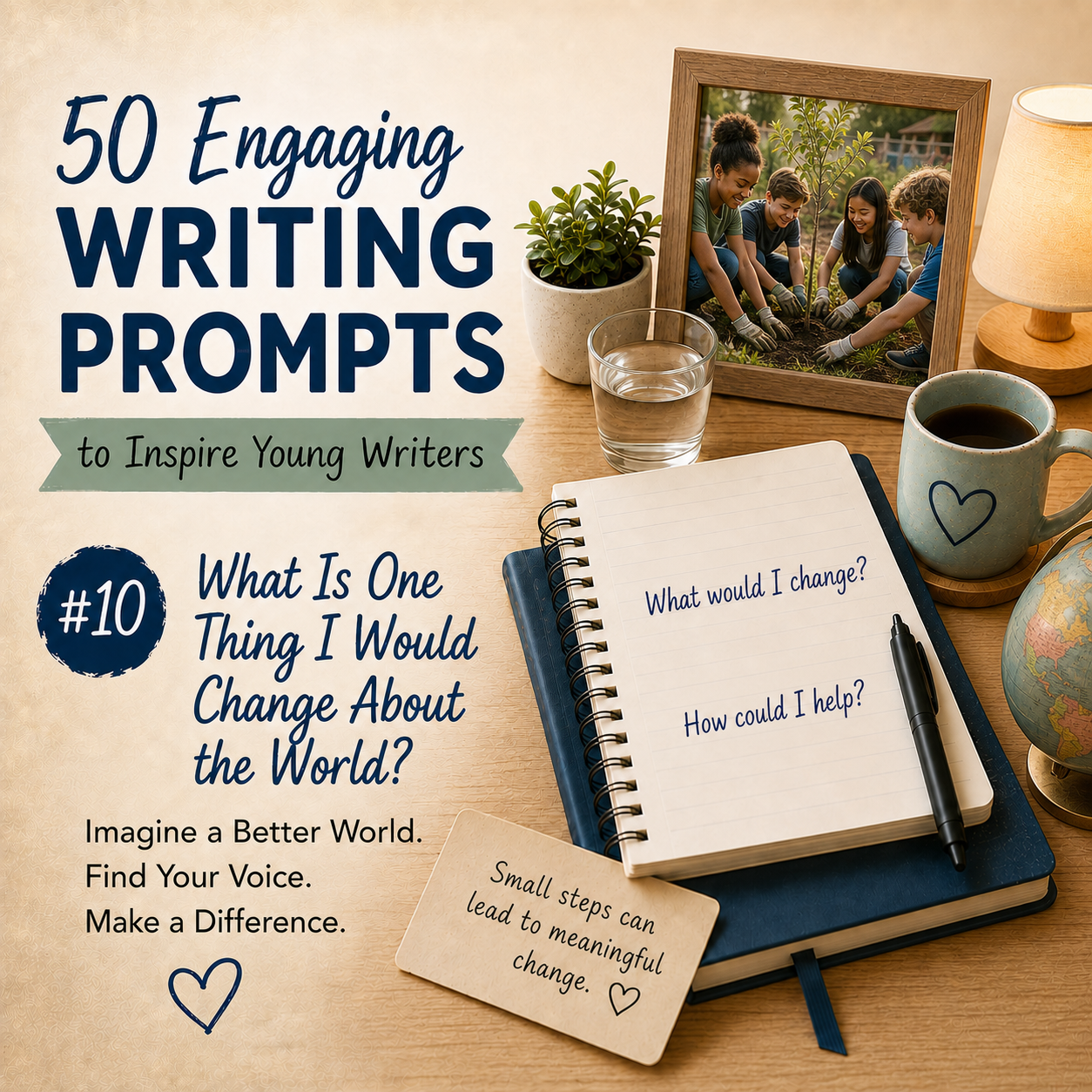
The world has many wonderful things, but it also has many problems. Some affect the entire planet, while others affect only a school, a neighborhood, a family, or one person.
Sometimes we wish people would be kinder to each other or that communities could be safer. Other times, we worry about protecting animals and reducing pollution to better our planet. Even the smallest problems can have a big impact on people’s lives.
Thinking about what you would change about the world can reveal something important, such as what you notice, what you value, and how you believe life can be better.
Today, let’s imagine that you have the power to begin one positive change. What would it be? Why is it important? And what could people do to make that change happen?

Journal Prompt
What is one thing you would change about the world?
Identify one problem you would like to change. Explain why it matters, whom it affects, and what you believe should be done about it.
Begin with a strong hook that makes your reader want to continue.

Reflection Questions
These questions are here to help if you feel stuck or want to explore your idea more deeply. You can answer some, all, or none.
What problem would you like to change?
When did you first begin noticing it?
Why does this issue matter to you?
Who is most affected by it?
How does the problem affect people’s daily lives?
What might happen if nothing changes?
What would life look like if the problem were solved?
What is one realistic step people could take?
Who could help create this change?
What challenges might make the solution difficult?
How could those challenges be addressed?
What could someone your age do to help?
How would the world be different afterward?

Why Does This Matter?
Positive change begins when someone notices a problem and believes that something better is possible.
Writing about an issue helps you examine it carefully. You must decide why it matters, consider how it affects others, and clearly explain your ideas for change. This strengthens your ability to think critically and communicate persuasively.
You do not need the perfect solution. Many important changes began with a question, an idea, or one person taking a small first step.
Your writing can help others see a problem differently—and possibly inspire them to help.

Vocabulary Word
Initiative (noun)
Definition: The ability or decision to begin something without waiting for someone else to take the first step.
Example: “Maya showed initiative by organizing a weekend cleanup at the neighborhood park.”
Try to use the word initiative in your journal writing.

Writer’s Tip: Strong Hooks
A hook is the opening of a piece of writing. Its purpose is to capture the reader’s attention and make them want to keep reading.
Your hook should connect directly to your topic. It should create curiosity without misleading or confusing the reader.
Four Ways to Begin
1. Ask a Thoughtful Question
A question invites readers to consider the problem.
What if every student had a quiet, safe place to learn?
Avoid questions with answers that are too obvious, such as:
Do you think kindness is good?
Instead, ask a question that encourages deeper thought.
2. Make a Bold Statement
A strong statement introduces your position immediately.
No student should feel invisible at school.
A bold statement should be confident, but it should not exaggerate.
3. Create a Vivid Scene/Tell a Story
Help readers picture what someone experiences.
A student enters the crowded cafeteria, looks from table to table, and realizes there is nowhere they feel welcome.
Use specific details to make the moment feel real.
4. Share a Surprising Fact
A relevant fact can show why the problem deserves attention.
Schools can discard thousands of pounds of uneaten food in a single year.
Only use facts that you have verified through a trustworthy source. Never invent a statistic simply to make your opening sound impressive.
Try It!
Write two different hooks for your topic.
Choose from:
A thoughtful question
A bold statement
A vivid scene
A verified fact
Read both hooks aloud. Then select the one that best introduces your idea and makes you want to keep reading.
Writing Plan
Paragraph 1: Capture Attention
Begin with a strong hook.
Identify the change you would make.
Briefly explain why it matters.
Paragraph 2: Explain the Problem
Describe what is happening now.
Explain whom the problem affects.
Include specific examples or details.
Paragraph 3: Imagine the Change
Describe what life could look like if the problem improved.
Explain the benefits of the change.
Show how it could affect people’s daily lives.
Paragraph 4: Propose a First Step
Suggest one realistic action.
Explain who could help.
Describe what someone your age could do.
Conclusion: Leave the Reader Thinking
Return to your central idea.
Reinforce why the change matters.
End with hope, a challenge, or a call to action.
Quote to Remember
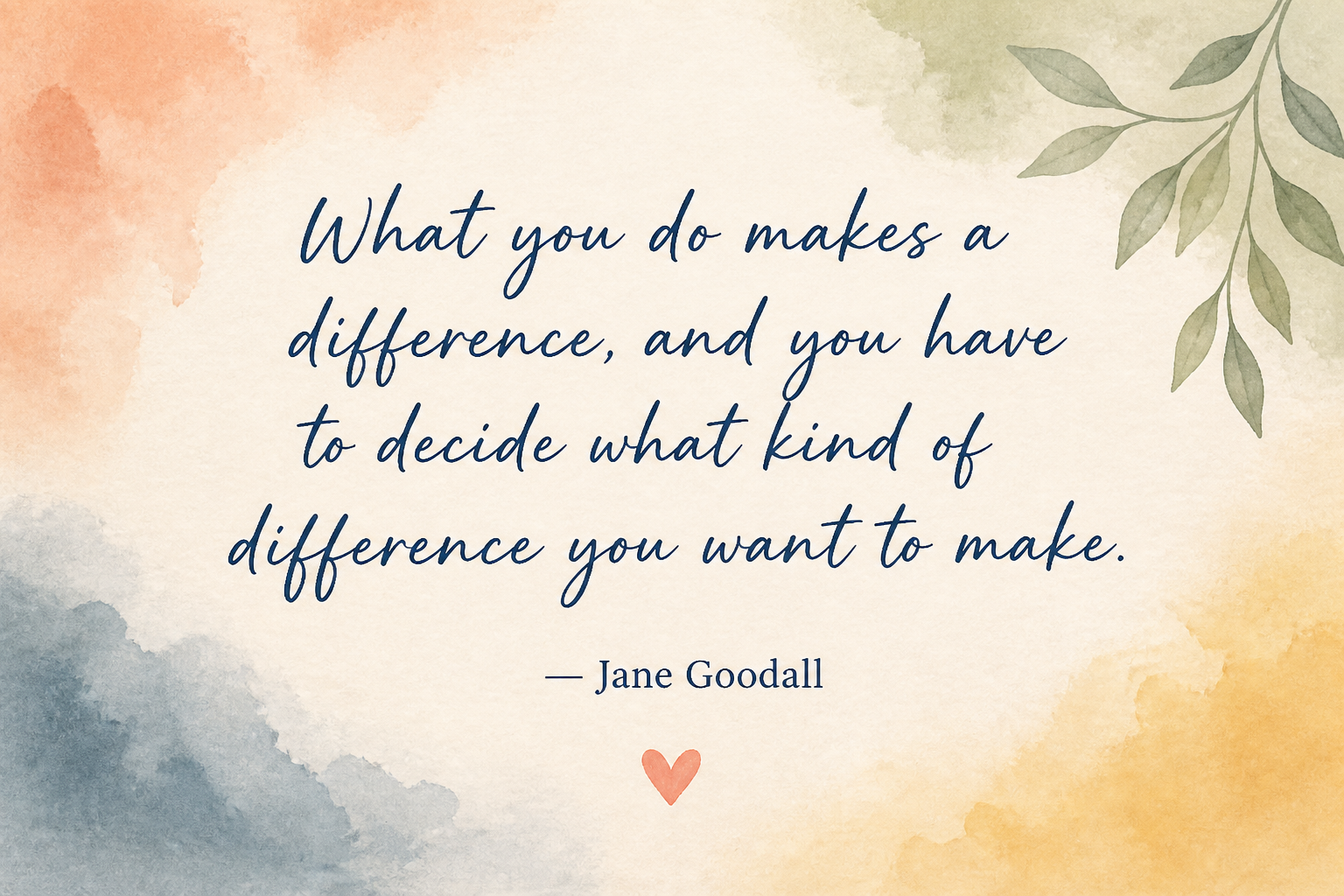
“What you do makes a difference, and you have to decide what kind of difference you want to make.”
— Jane Goodall
Think About It:
What difference would your proposed change make, and what is one small action you could take to help?
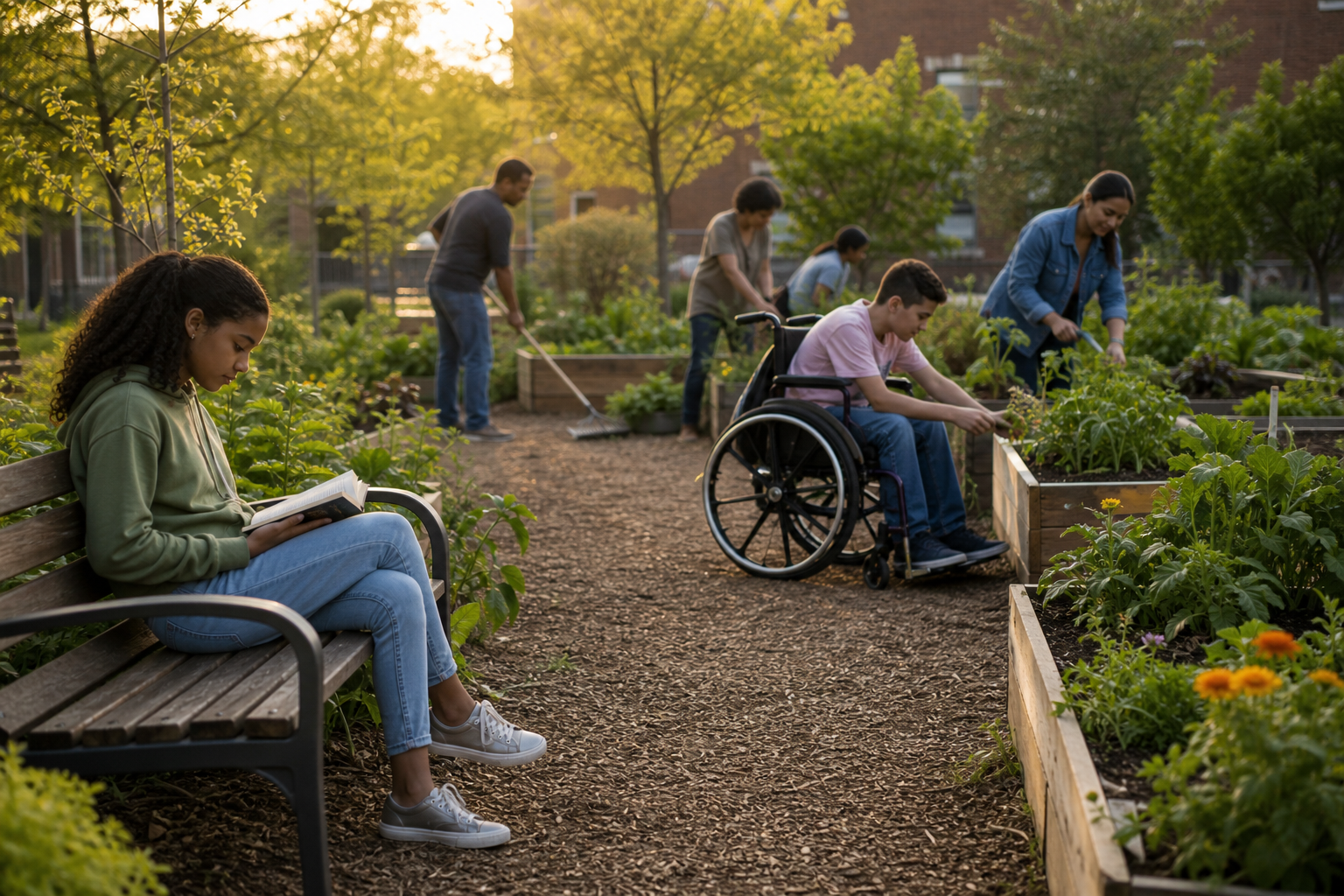
Bonus Writing Challenge
Imagine that your proposed change has become a reality.
Write a scene set five years in the future. Show a person experiencing the benefits of the change.
Use specific details to reveal what is different. Instead of simply saying that life is better, help readers see, hear, or experience the improvement.

Keep Writing!
You may not be able to change everything at once, but every positive change begins with someone who notices something and works to change it.
Your ideas matter. Your words can help others understand a problem, imagine a solution, and recognize what is possible.
Every sentence you write is another stone in the bridge you are building toward a better future.
Keep writing.
Keep growing.
Keep building.