50 Engaging Writing Prompts #14: What Would I Find in a Box in My Grandparent’s Attic?
Looking for engaging journal prompts for upper-elementary and middle-school students? This free printable writing prompt invites students to imagine discovering an old box in a grandparent’s attic, uncover the meaningful story hidden inside, and strengthen their creative writing through suspense, pacing, foreshadowing, and carefully placed clues.
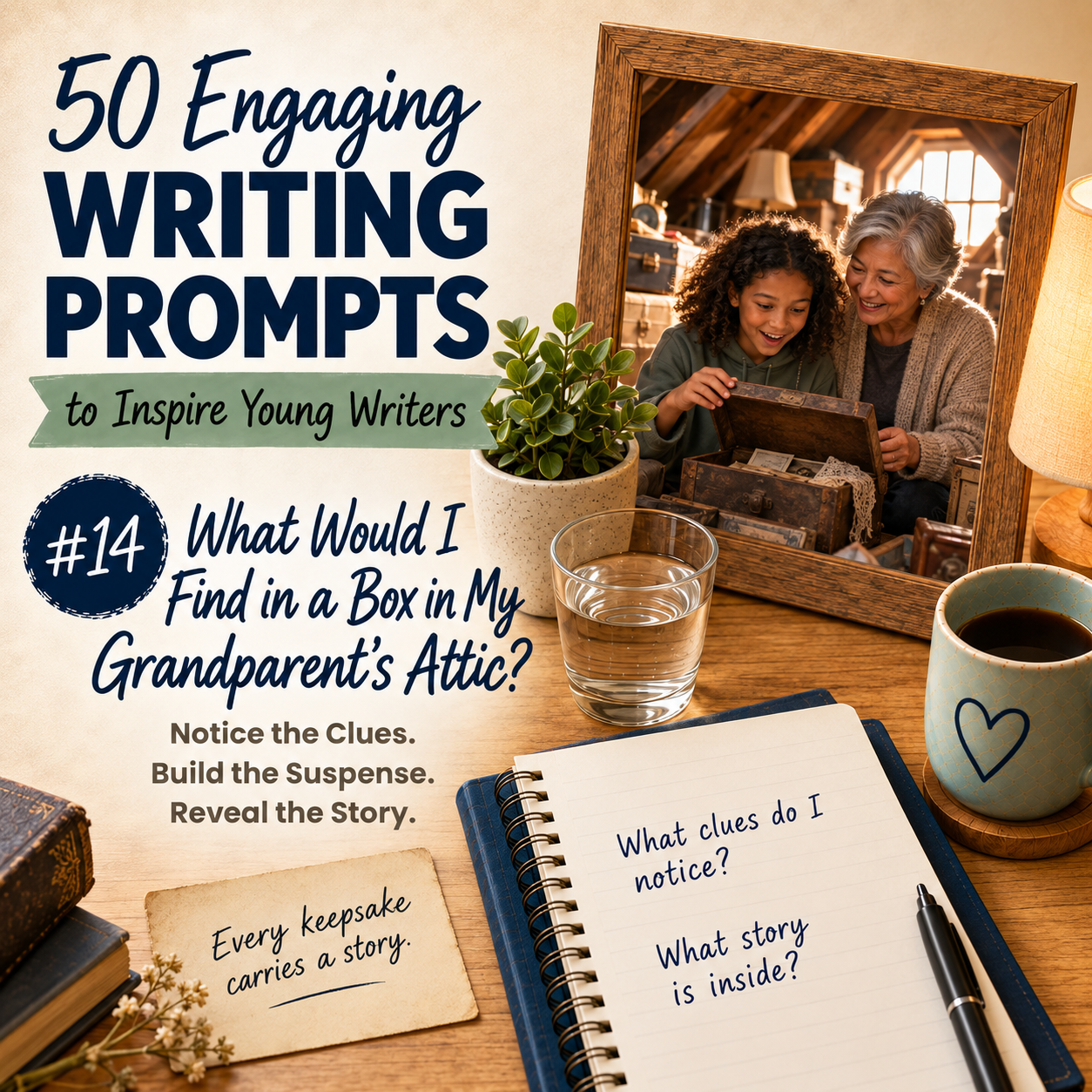
Attics can be some of the most interesting places in a house. The longer someone lives there, the more belongings, memories, and stories the attic may collect. It can hold far more than old furniture and holiday decorations. An attic can become a treasure trove of forgotten keepsakes, and one ordinary-looking box might hold a story that has not been told in years.
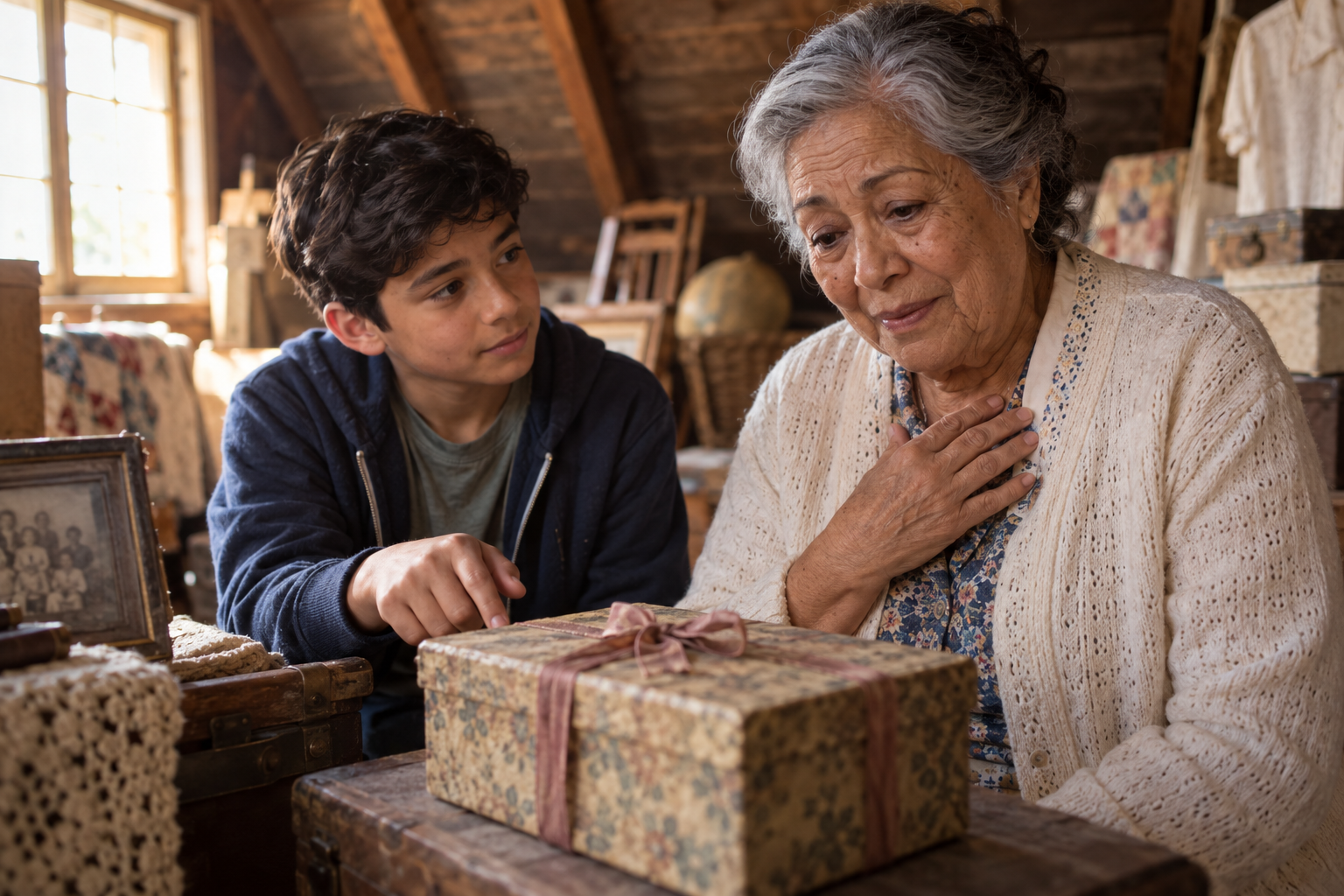
Imagine that you are helping your grandparent organize the attic. With their permission, you explore and discover an old box tucked beneath the attic eaves. Something about it captures your attention—perhaps the name written across the lid, the faded ribbon tied around it, or a date from long before you were born. When your grandparent sees the box, their expression changes.
What is inside the box? Why has it been kept for so many years?
Writers do not have to reveal everything at once. They can build suspense by slowing down important moments, planting small clues, and allowing readers to wonder what will happen next.
Today, let’s uncover the story hidden inside the box.
Journal Prompt
What Would I Find in a Box in My Grandparent’s Attic?
Imagine that you are helping your grandparent look through the attic when you discover an old box covered in dust. Your grandparent lets you examine and open it, but something about the box suggests it holds an important story.
Describe the attic, the box, and the clues you notice. Show how your anticipation grows as you prepare to open it. Build suspense by slowing down the moment, revealing information gradually, and including hints about what might be inside.
Finally, reveal what the box contains and explain why the discovery matters to your grandparent, your family, or you.

Reflection Questions
Use these questions if you need help developing your ideas. You do not need to answer every question.
Why are you helping your grandparent in the attic?
What does the attic look, smell, sound, and feel like?
What makes you notice it?
What does the box look and feel like?
Does it make a sound when you move it?
How does your grandparent react when they see it?
Does anything delay the opening of the box?
What is actually inside?
Why did your grandparent save these objects?
What story does your grandparent tell?
Why Does This Matter?
Suspense keeps readers interested because it gives them a reason to continue. When writers reveal everything immediately, readers have little opportunity to wonder, predict, or worry alongside the character.
Learning to control pacing helps you decide when a story should move quickly and when an important moment deserves more attention. Foreshadowing allows you to plant clues that prepare readers for what will happen without giving away the answer.
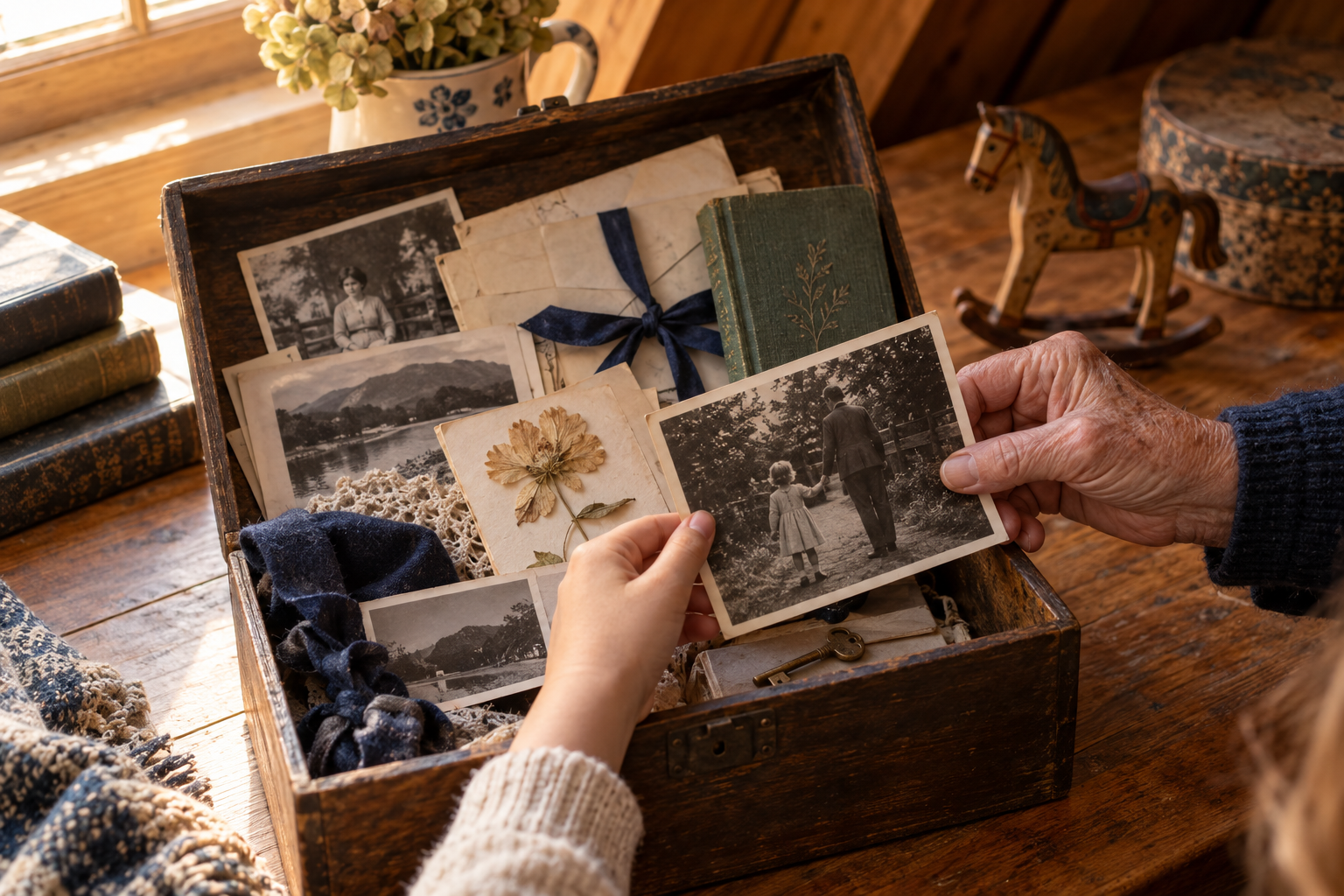
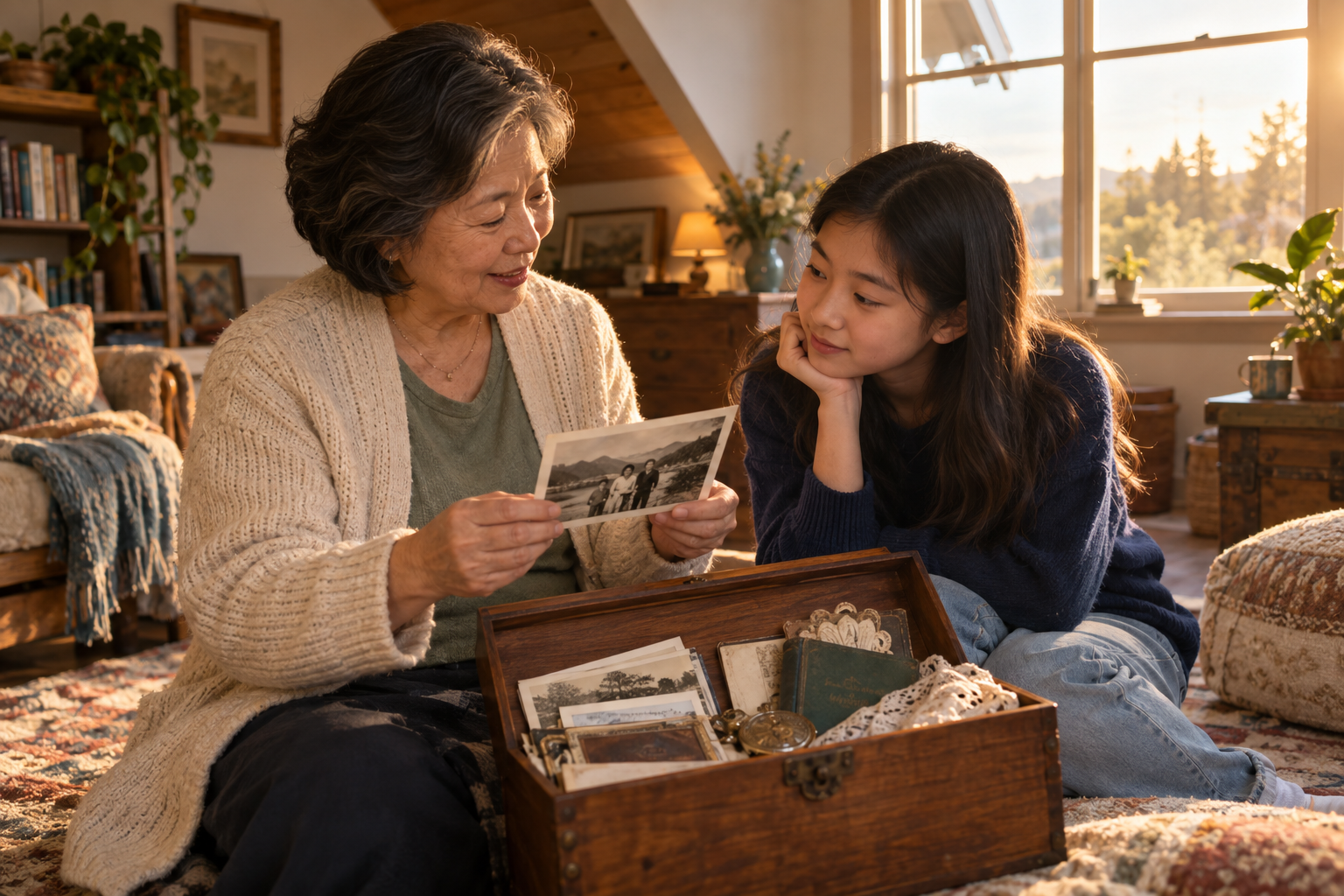
This prompt also reminds us that ordinary objects can carry extraordinary stories. Photographs, letters, recipes, toys, medals, and handmade items can connect people to memories that might otherwise be forgotten.

Vocabulary Word
Anticipation
Noun
Definition: A feeling of excitement, curiosity, or nervousness about something that will happen.
Example: Anticipation filled the attic as I rested my fingers on the box’s rusty latch.
Try it: Use the word anticipation somewhere in your response.
Writer’s Tip: Build Suspense
Suspense is the feeling of curiosity, excitement, or uncertainty that makes readers wonder what will happen next.
Writers can build suspense in several ways.
1. Slow Down the Important Moment
Do not open the box immediately. Describe the character’s movements, thoughts, and observations.
Too fast:
I found an old box and opened it. Inside was a stack of letters.
With suspense:
I brushed the dust from the lid. Beneath it, faded blue letters slowly appeared: For Daniel—when the time is right.
My name was Daniel.
I looked at Grandpa, but he had turned toward the attic window.
2. Plant Small Clues
Foreshadowing gives readers hints about what may happen later.
Possible clues include:
a familiar name;
an important date;
a photograph with someone missing;
a symbol that appears elsewhere;
a key taped beneath the lid;
your grandparent’s unusual reaction;
a sound coming from inside the box;
an object that seems familiar.
The clues should make sense after the final reveal.
3. Delay the Answer
Create a believable reason the character cannot immediately discover what is inside.
For example:
The latch is stuck.
The grandparent pauses before giving permission.
A photograph falls from beneath the box.
The lights flicker during a storm.
Someone calls from downstairs.
The character notices a message on the bottom of the box.
A brief delay gives anticipation time to grow.
4. Vary Your Sentence Length
Longer sentences can slow the reader down and allow details to build.
I traced the carved initials with one finger, wondering why they matched the initials engraved inside Grandpa’s watch.
Short sentences can emphasize an important discovery.
The lock clicked.
Grandpa stopped breathing.
I lifted the lid.
5. Reveal the Answer at the Right Time
When the box is finally opened, give the discovery enough attention. Show the character’s reaction and explain why the contents matter.
The object itself does not have to be expensive or historically important. Its emotional meaning can make it valuable.
Inspirational Quote

“But every family has its memories, and those memories are passed on to their children.”
— Lorna Luft
Follow-Up Questions
Why is it important for older and younger generations to share stories? Which memory or story would you want to pass on someday?
Bonus Writing Challenge
Choose one object from inside the box and write a short piece from its point of view.
Describe:
who once owned it;
an important event it witnessed;
how it ended up in the box;
what it has been waiting for someone to discover.
End with this sentence:
At last, someone remembered my story.
Extra challenge: Include one clue in the object’s account that changes how the reader understands the original story.

Keep Writing
Every object can hold a memory, and every memory can become a story. When you write these stories down, you help carry them across the bridge from one generation to the next.
Keep writing. Keep growing. Keep building.