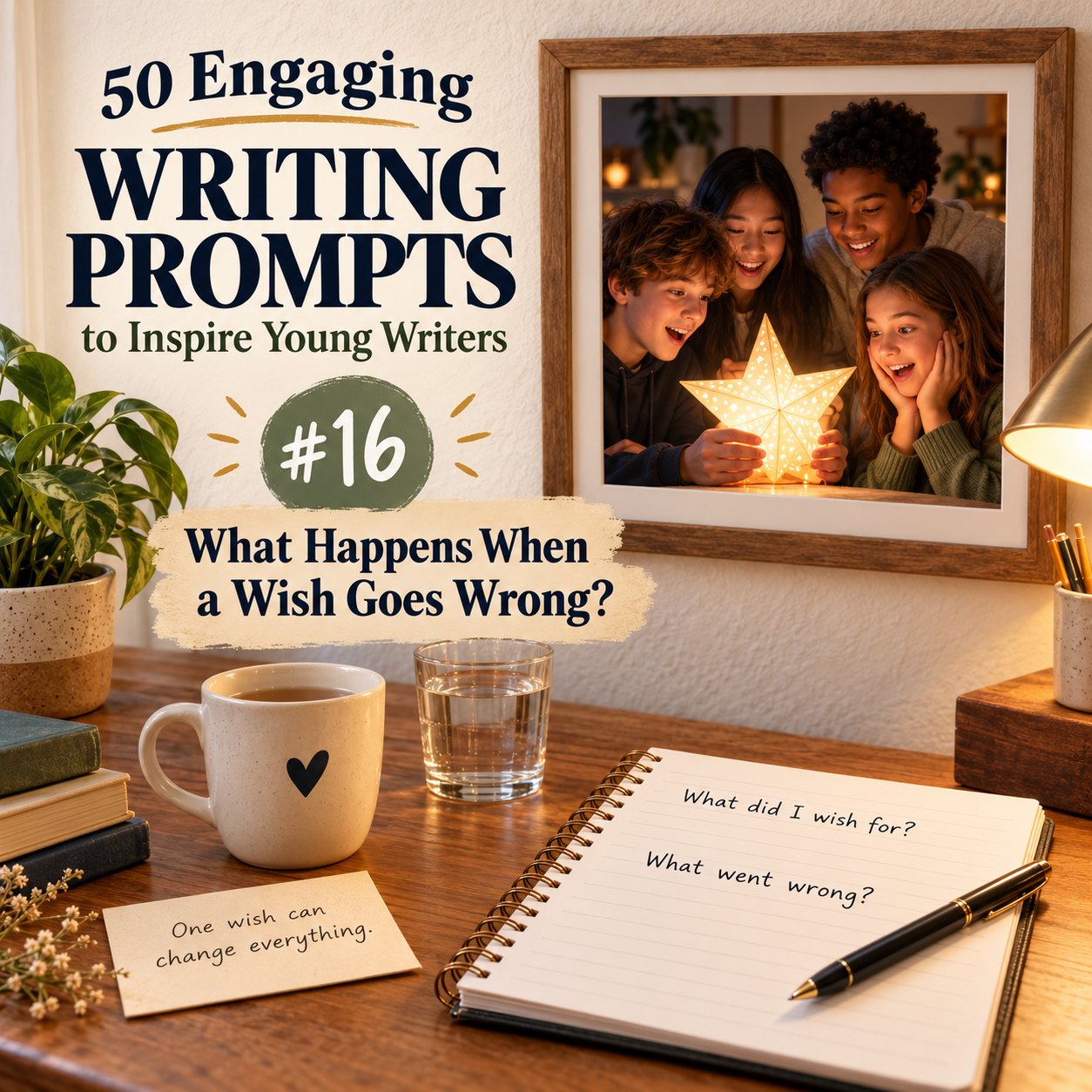
Looking for imaginative writing prompts for upper-elementary and middle-school students? What Happens When a Wish Goes Wrong? is a free printable writing activity that invites students to imagine a wish with unexpected consequences. As they follow the wish from its exciting beginning to its surprising complications, young writers practice building conflict, connecting causes and effects, developing believable character choices, and creating a satisfying resolution.
Reading Time: 5 minutes
Estimated Writing Time: 10–15 minutes
Have you ever made a wish? Most of us have at some point! We wish for things we want, for people or circumstances to change, and for events to happen exactly as we imagine. Our wish lists could be endless.
Some wishes are playful, while others come from a sincere desire to make a difficult situation better. There is nothing wrong with hoping for change. However, getting exactly what we ask for may create problems we never expected. A difficult experience might also contain a lesson, relationship, or opportunity that we would miss if everything were simply whisked away.
Stories about wishes often explore the difference between what a character wants and what that character truly needs. A wish may solve one problem while creating three more. It may be interpreted too literally, affect other people, or reveal that the character did not fully understand what they were asking for.
Imagine that you have been given one wish. The wish comes true—but not in the way you expected! What unexpected consequences follow? What conflicts and complications arise? What choices must you make, and how does the experience change you?

Writing Prompt
Imagine that you are given one wish.
You carefully decide what to ask for, and the wish comes true. At first, everything seems wonderful. Then you notice that something is wrong. Perhaps the wish was interpreted too literally, an important detail was overlooked, or getting what you wanted creates a chain of unexpected consequences.
Write a story showing:
what your character wishes for;
why the wish matters so much;
how the wish first appears to work;
what unexpected problem develops;
how one complication leads to another;
what difficult choice the character must make;
how the conflict is resolved; and
what the character learns.
Your story may be funny, mysterious, adventurous, heartwarming, or a little unsettling, but it should remain appropriate for school. Keep the characters fictional, and do not use the wish to harm, punish, erase, or embarrass a real person.

Reflection Questions
Use these questions if you need help developing your ideas. You do not need to answer every question.
Why do you believe the wish will improve life?
What exactly do you say?
How does the wish first appear to work perfectly?
What small detail first suggests that something is wrong?
How does the first problem create another problem?
Who else is affected by the wish?
What difficult choice must you make?
What lesson do you learn?

Why Does This Matter?
A strong plot is built from connected events. One action causes a result; that result creates a complication, and the complication forces you to choose.
Writing about a wish gone wrong helps you practice developing a complete plot instead of simply listing what happens. Each event should grow naturally from the wish, and each complication should increase the pressure on you as the character.
The most satisfying stories do more than solve an external problem. They also show how the experience changes the character’s understanding, priorities, or behavior.

Vocabulary Word
Unforeseen
Adjective
Definition: Not expected or predicted
Example: The wish produced an unforeseen consequence when every drawing in Maya’s notebook came to life.
Writing Challenge: Use the word unforeseen somewhere in your response.

Writer’s Tip: Build a Chain of Consequences
A wish-gone-wrong story should not feel like a collection of random disasters. Each complication should connect logically to the wish.
Use this pattern:
Wish → Result → Complication → Choice → Resolution
Basic Idea
I wished that I never had to do homework again. My wish came true, but then something bad happened.
Developed Idea
Noah wishes that no one at his school will ever receive homework again. The next morning, every workbook, assignment, and study guide disappears. Students celebrate—until they discover that anything connected to learning outside the classroom has vanished, including music practice, sports drills, science-fair notes, recipes, and instructions for caring for the class animals.
Now Noah must decide whether to admit that he caused the problem and give up something important to reverse the wish.
The developed version connects every complication to the wish's original wording.
Make the Wish Specific
Readers should understand exactly what you ask for. The wording matters because it may contain the detail that causes the problem.
Establish the Motivation
Show why you want this particular wish. When you deeply want something, more is at stake if it goes wrong.
Begin with Success
Allow yourself—and the reader—to believe that the wish worked perfectly. The later problem will feel more powerful if the beginning appears promising.
Let the Trouble Grow
Begin with a small warning sign. Then allow one consequence to create another.
For example:
One forgotten assignment disappeared.
Then every assignment disappeared.
By lunchtime, anything that required practice had vanished too.
Force a Meaningful Choice
In the story, you should not simply wait for someone else to fix everything. The wish should eventually require a difficult decision.
You might have to:
admit what happened;
sacrifice something valuable;
help someone affected by the wish;
accept the original circumstances;
rewrite the wish;
or find a solution no one else considered.
Show the Change
By the conclusion, explain how the experience changes you. The lesson should grow from the events, not be added suddenly at the end.
Inspirational Quote
Quote to Remember
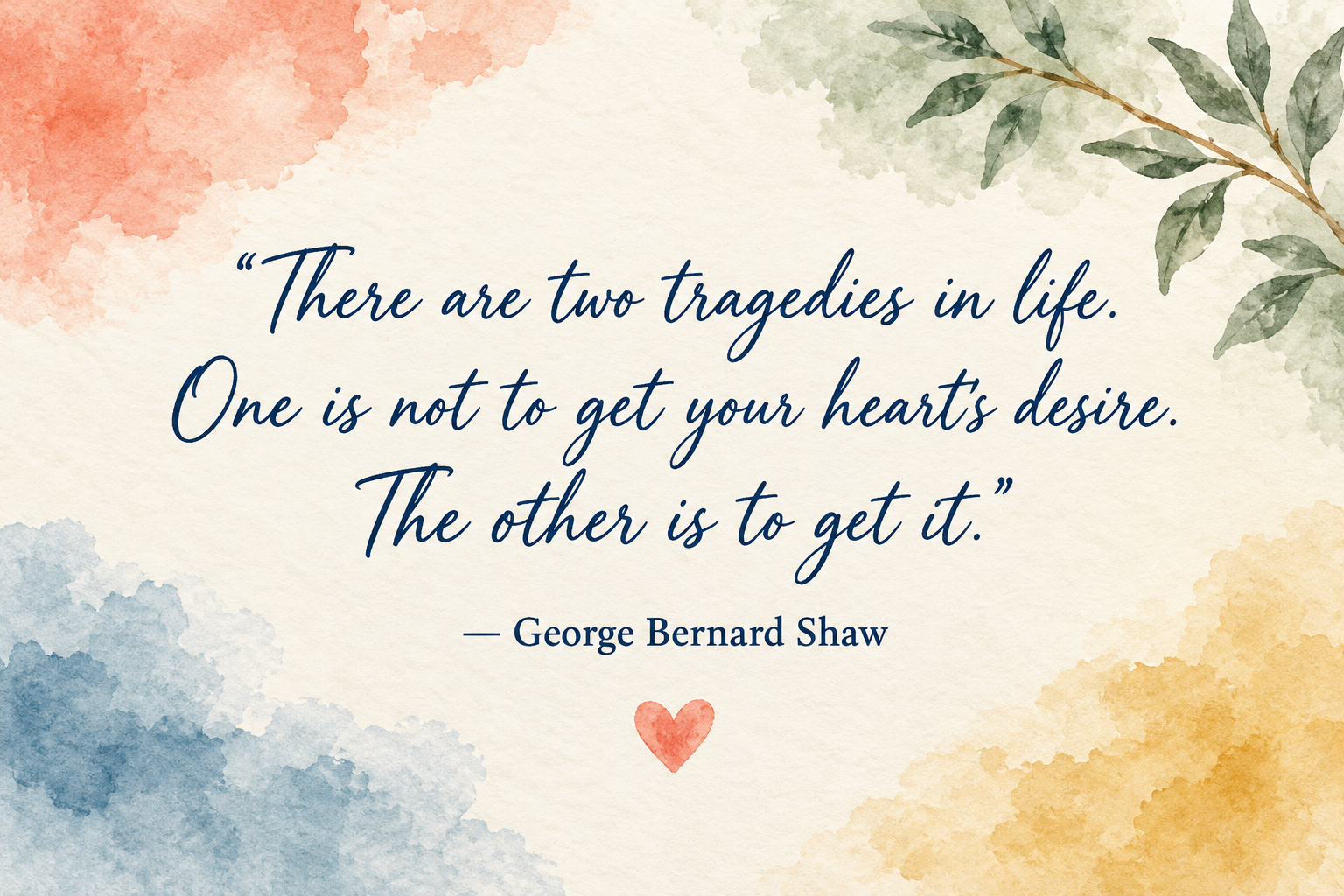
“There are two tragedies in life. One is not to get your heart’s desire. The other is to get it.”
— George Bernard Shaw
Why might getting exactly what you want sometimes create a problem? How does Shaw’s quotation connect to a wish-gone-wrong story?
Bonus Writing Challenge
You are offered a second wish—but this time, you refuse to use it immediately.
Write an alternate ending in which you solve the problem without simply wishing everything back to normal.
Include:
a creative solution;
help from someone affected by the first wish;
something the character must give up;
a callback to an earlier clue; and
a final decision about what to do with the unused wish.
End with this sentence:
For the first time, I understood that having a wish did not mean I had to use it.

Keep Building
A compelling story does not give a character everything they want. It gives the character choices, complications, and opportunities to grow.
Make the wish tempting. Make the consequences believable. Make the final choice meaningful.
Keep writing. Keep growing. Keep building.